
Can You Get Your Period While On Utrogestan?
Table of contents:
- What Does Utrogestan Do?
- What’s the Usual Utrogestan Dose?
- What are the Advantages of Utrogestan?
- Why Understanding the Impact of HRT on Menstruation is Important
- Can You Get Your Period While on Utrogestan?
- Does Utrogestan Stop Periods?
- When Do You Bleed on Utrogestan?
- Will I Experience Heavy Bleeding on Utrogestan?
- What is Utrogestan Breakthrough Bleeding?
- No Withdrawal Bleed on Utrogestan: Is This Normal?
- Frequently Asked Questions
- Specialist Support You Can Rely Upon
Menopause is one of the most pivotal events of a woman’s life, affecting people both physically and mentally. Medication is available to help with symptoms and support your body as you navigate the changes ahead, but which one is right for you?
Utrogestan is one such option. Known as micronised progesterone, it has been proven effective for symptoms such as hot flushes, night sweats, and sleep disturbances. However, because everyone reacts to medication differently, the fact that a treatment can have a positive impact doesn’t mean it’s suitable in all cases. Doing your research is essential.
An important element of this research is whether or not you can menstruate while taking the medication. So, can you get your period while on Utrogestan? That’s what this article will explore.
What Does Utrogestan Do?
Utrogestan 100 mg capsules contain a plant-based form of progesterone, the female sex hormone that prepares the body for pregnancy. The progesterone in Utrogestan is identical to the progesterone the body makes before menopause.
During and after the menopause, oestrogen and progesterone levels fall, causing the common menopause symptoms. Hormone Replacement Therapy (HRT), such as Utrogestan, helps replace declining hormone levels to improve your quality of life and provide relief.
Women who take HRT and have their womb intact need to take a progesterone HRT and an oestrogen one. However, because oestrogen causes the womb lining to grow, Utrogestan causes it to shed, preventing the lining from building up and lowering associated risks. You can learn more about the uses of Utrogestan in our dedicated article.
What’s the Usual Utrogestan Dose?
How much Utrogestan you’ll be prescribed will depend on where you are in your menopause journey. If you are still having periods, or you’ve had one within the last 12 months, the usual prescription is two 100 mg capsules taken together in the evening. These are taken from day 15 to day 26 of your HRT cycle.
If you have not had a period for more than a year, the usual dose is one 100 mg capsule every evening without a break. For information about how long it takes Utrogestan to work, read our guide.

What are the Advantages of Utrogestan?
One of the major advantages of Utrogestan is that it is plant-derived and body-identical, meaning it is identical to the progesterone your body naturally produces. Women who take Utrogestan are less likely to experience side effects compared to other, more traditional types of progesterone HRT.
There is strong evidence that micronised progesterone-like Utrogestan does not increase the risk of blood clots, unlike other older progesterone HRT options. Utrogestan may also be associated with a lower risk of breast cancer compared to other forms of progestogen HRT.
Why Understanding the Impact of HRT on Menstruation is Important
Having a clear indication of whether you can have a period while taking HRT medication is essential for a number of reasons. These include:
- Safety and Monitoring: Unscheduled bleeding while taking HRT can sometimes be a sign of a medical issue that needs looking into, such as endometrial hyperplasia or endometrial cancer in rare cases.
- Need for Contraception: HRT medication doesn’t act as a contraceptive or impact fertility, so it’s still possible that you could become pregnant. The treatment can also mask or alter bleeding patterns, so there’s a risk you may not realise that you’re still ovulating. According to the NHS, you should continue to use contraception for at least 1 year from your last period if you’re over 50 years old, or 2 years if you’re under 50.
- Managing Treatment: Persistent unscheduled bleeding can be a sign that your HRT programme should be reviewed and potentially adjusted. Investigation is recommended if bleeding persists for more than 3 months.
Can You Get Your Period While on Utrogestan?
Utrogestan doesn’t cause you to have a period, but it may make you bleed, which looks similar to a period. Utrogestan is a type of progestogen HRT that’s suitable for women who still have their wombs and should be taken alongside oestrogen replacement therapy.
That’s because oestrogen causes your womb lining to thicken, so taking Utrogestan helps shed your womb lining. For this reason, many women experience some bleeding, similar to a period, at the end of each cycle.
This is called a withdrawal bleed, and it's completely normal – it happens because your progesterone levels drop when you stop taking Utrogestan for those few days. The bleeding is usually lighter and shorter than a natural period, though this can vary from woman to woman.
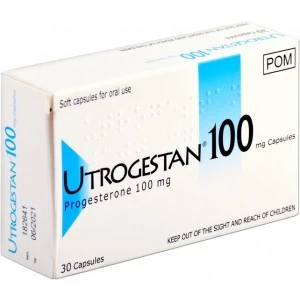
Utrogestan
- Increases progesterone levels
- Reduces postmenopausal symptoms
- Available from a UK-registered pharmacy
Does Utrogestan Stop Periods?
Not exactly. Utrogestan doesn't stop your periods in the way that contraception might, but the type of HRT regimen you're on will affect whether or not you bleed.
If you're on a sequential regimen (taking Utrogestan for part of each month), you'll usually have a withdrawal bleed after you finish each course of capsules. This is normal and expected – it's your womb lining shedding in response to the drop in progesterone.
If you're on a continuous regimen (taking Utrogestan daily), you shouldn't experience regular bleeding once your body adjusts. Some women experience spotting or irregular bleeding in the first 3 to 6 months, but this usually settles down. If it doesn't, speak to your doctor.
When Do You Bleed on Utrogestan?
When you bleed depends on which HRT regimen you've been prescribed. On a sequential regimen, bleeding typically happens in the few days after you stop taking Utrogestan each cycle – so if you take your capsules on days 15 to 26, you'd usually bleed around days 27 or 28 onwards. This is called a withdrawal bleed and is similar to a period, though it may be lighter or shorter than what you were used to before menopause.
On a continuous regimen, you may have some irregular bleeding or spotting during the first few months as your body adjusts. After that, most women find that bleeding stops altogether.
Will I Experience Heavy Bleeding on Utrogestan?
Some women do experience heavier bleeding than expected when they first start Utrogestan, particularly during the first 3 to 6 months of treatment. This is common as your body adjusts to the new hormone levels and usually settles with time.
However, if your bleeding is consistently heavy, lasts longer than expected, or happens more than once a month, you should speak to your doctor. They may need to adjust your Utrogestan or oestrogen dose to find the right balance. In some cases, your doctor may want to investigate further to rule out other causes – particularly if heavy or unexpected bleeding continues beyond 6 months of starting HRT.
What is Utrogestan Breakthrough Bleeding?
Breakthrough bleeding is any bleeding that happens outside of your expected withdrawal bleed – for example, mid-cycle spotting or bleeding on days when you're still taking your capsules. It's one of the most common side effects when starting HRT, and while it can be a nuisance, it's usually not a cause for concern.
Breakthrough bleeding occurs as your body adjusts to new hormone levels. It can also occur if you've missed a dose, changed your oestrogen dose, or started taking Utrogestan at a different point in your cycle. Most women find that breakthrough bleeding settles within the first 3 to 6 months of treatment.
If breakthrough bleeding persists, your doctor may suggest adjusting your progesterone dose or extending the number of days you take Utrogestan each cycle. If you experience any bleeding after you've been on HRT for more than a few months and it was previously settled, contact your doctor – they may want to investigate further to be safe.

No Withdrawal Bleed on Utrogestan: Is This Normal?
Yes – it's perfectly normal not to have a withdrawal bleed every cycle, and it's nothing to worry about as long as there's no chance of pregnancy. Not every woman bleeds at the end of each course of Utrogestan, and some months you may bleed more lightly than others, or not at all.
If you're taking Utrogestan on a continuous regimen (every day), bleeding is expected to stop once your body adjusts to the medication. On a sequential regimen, a missed withdrawal bleed occasionally is also common – it simply means there wasn't much womb lining to shed that cycle.
However, if you're concerned or if you've had a sudden change in your bleeding pattern after being settled on HRT for several months, it's always worth checking in with your doctor for reassurance.
Frequently Asked Questions
Have questions about bleeding and periods while taking Utrogestan? Here are answers to the most common questions women have about HRT.
Should I Take Utrogestan 100 mg Capsules With or Without Food?
Utrogestan 100 mg capsules should ideally be taken with food to increase bioavailability. It is worth pointing out that doing so can increase blood levels and enhance the risk of drowsiness, which is why most women find it easier to take Utrogestan just before bed.
Is Utrogestan a Contraceptive Pill?
No, Utrogestan is not a contraceptive pill, and it is possible to get pregnant while you are taking HRT. To prevent pregnancy, you will need to use contraception until 2 years after you have your last period if you’re under 50 or for one year if you are over 50.
If you're looking for contraceptives, Prescription Doctor has a range of options. These range from the combined pill and mini-pill, through to the morning-after pill. and contraceptive ring.

Are There Alternatives to Utrogestan?
Prescription Doctor offers a range of menopause treatments as alternatives to Utrogestan. These include:
- Provera: A type of progestogen HRT that contains medroxyprogesterone acetate as its active ingredient.
- Veoza: A non-hormonal menopause treatment that may be suitable for women who cannot or choose not to take hormonal methods. However, it is not specifically licensed for all menopausal symptoms.
- Evorel Conti: A continuous combined hormone replacement therapy which contains man-made versions of oestrogen and progesterone. Evorel Conti is supplied as a patch and is worn on the skin rather than taken as a pill.
- Bijuve: A combined oral capsule that contains both oestradiol and micronised progesterone in one pill, designed for postmenopausal women who want body-identical HRT without taking two separate medications.
Some women may also use a Mirena coil as an alternative way of receiving progestogen as part of HRT – speak to your GP about whether this is suitable for you.
Specialist Support You Can Rely Upon
If you’re going through menopause or experiencing symptoms, you may find it helpful to feel you have a strong support network at your disposal when you need advice or are unsure of the best course of action. This is where Prescription Doctor can help.
Our service is designed to provide help and guidance whenever it is needed. We start with a simple online consultation where you provide details about your medical history and any other treatments you may be taking. The information is then reviewed by our experienced clinicians to determine whether your chosen medication is suitable for your circumstances. Once approved, the item is dispatched by our General Pharmaceutical Council-registered pharmacy in discreet packaging.
We will then regularly check in with you to monitor progress and ensure everything is working as planned. You can also contact the team if you have any questions about your treatment plan, and our clinicians will be happy to help. We are here for the whole journey.
Ready to get started? Begin a consultation with Prescription Doctor today.
Sources
- PubMed (2018): Progesterone for the treatment of symptomatic menopausal women.
- NHS: How and when to take Utrogestan.
- NHS: Side effects of Utrogestan.
- EMC (2024): Utrogestan 100mg Capsules – Summary of Product Characteristics.
- BMS (2022): Progestogens and endometrial protection.
- NHS: Types of hormone replacement therapy (HRT).
- British Menopause Society (2024): Management of unscheduled bleeding on hormone replacement therapy (HRT).
- NHS (2023): Pregnancy, breastfeeding and fertility while taking or using sequential combined hormone replacement therapy (HRT).
- CoSRH (2025): Contraception for Women Aged Over 40 Years.
Authored By

Sam Jeans
Medical Content WriterPublished on: 12/08/2024 Re-Published on: 10/03/2026
Reviewed By

Mohamed Imran Lakhi
MPharm - Lead PharmacistReviewed on: 10/03/2026
How We Are Regulated
Payment Options


© 2013 - 2026 Al Muhsineen Limited. All Rights Reserved. Registered Pharmacy: 34 Halliwell Road, Bolton BL1 8RL. Registered Office: 254 First Floor, Shearbrow, Blackburn, England, BB1 8DS


Patient Login
Don't have an account?
Your account will be automatically created after placing your first order.